
Contact Info
Phone: 470-322-6757
Fax: 770-339-9804
Fax: 770-339-9804

Meet with us
631 Professional Drive, Suite 300
Lawrenceville, Georgia 30046
Lawrenceville, Georgia 30046
I was about 14 when I had my first breast ultrasound. My breasts were tiny, but before my period, they could feel heavy, hard, and so sore that even wearing a bra was uncomfortable.
If you’ve ever thought, “How can something so small cause this much trouble?”—I’m right there with you.
Now I’m 50. I’ve breastfed two children, had years of breast appointments, and had plenty of time to get to know my own patterns. My breasts stayed small through much of my life, but the monthly tenderness and lumpiness could make them feel impossible to ignore.
I’m sharing this because breast worries can feel surprisingly lonely. We talk about periods, hot flashes, and uncomfortable bras. But the moment we feel a lump or read an unfamiliar phrase on a mammogram report, it’s easy to go quiet and imagine the worst.
So let’s talk about it, the way we would with a friend.
I later learned that the lumpiness I could feel and the dense breast tissue noted on my mammograms describe different things.
Hormonal changes can make breasts feel sore, swollen, or lumpy before a period. You may hear cyclical breast pain or fibrocystic breast changes. Those symptoms can happen alongside dense breasts, but density itself is something a radiologist assesses on a mammogram—not something we can tell by touch. Mayo Clinic explains those monthly breast changes.
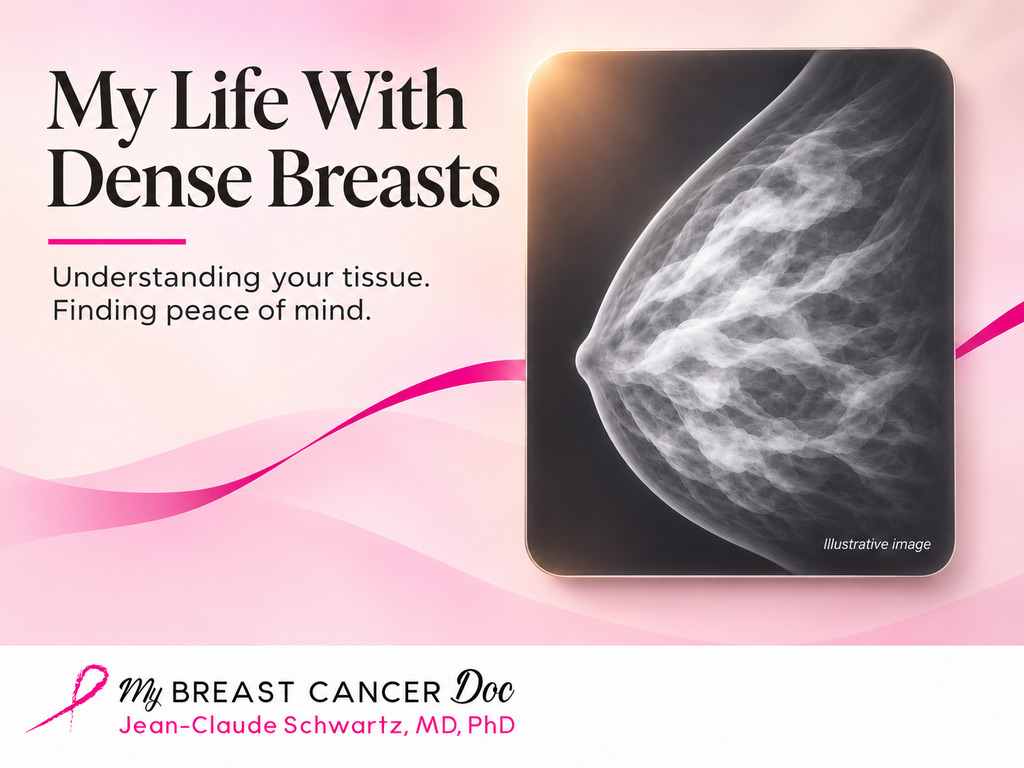
Dense breasts have relatively more glandular and supportive tissue, called fibroglandular tissue, and less fat on the image. Cup size has nothing to do with it.
And here’s the reassuring part: dense breasts are common, and they do not mean you have cancer. Nearly half of women age 40 and older who have mammograms have them, according to the National Cancer Institute.
If your report says heterogeneously dense, that’s category C. Extremely dense is category D. Both are considered dense. These are descriptions of tissue, not cancer stages.
Over time, I noticed patterns. Some cycles seemed more uncomfortable when I ate more red meat. I tried warmth, gentle massage, and evening primrose oil, and some approaches seemed comforting to me.
That’s my experience, rather than a treatment plan for anyone else. A warm compress or a comfortable bra may help some women. A simple symptom diary can also give you something useful to discuss at an appointment.
One thing I’ve learned about supplements: what seems helpful personally isn’t always supported by research. Evening primrose oil hasn’t been shown to work better than placebo for breast pain. Check supplements with your clinician, especially if you take medicines.
A breast examination and conversation with Dr. Jean-Claude Schwartz helped ease some of my anxiety. Being able to explain what hurt and have someone take it seriously mattered.
There is one point I want to share carefully: most breast pain isn’t cancer, but a painful lump still needs attention. Pain alone cannot tell us whether something is harmless. The American Cancer Society explains breast pain and when to get it checked.
Knowing my familiar monthly pattern helps. It doesn’t mean brushing aside a new or changing lump.
I have a mammogram every year as part of my own care. My record already notes my dense breasts, and I’m grateful for a technologist who takes care with positioning and image quality.
I now have implants, too. She knows how to position them for the additional pictures called implant displacement views, which help show more breast tissue. If you have implants, mention them when booking and ask about the team’s experience. Here’s what mammograms with implants involve.
Dense tissue does make imaging more challenging. It looks white on a mammogram, and many cancers do too, so a finding can be harder to see. Density also increases breast cancer risk independently of that masking effect.
That deserves a thoughtful plan, not a night spent trying to interpret every number online. Your density is one part of your risk picture, along with your age, family history, and other factors.
Keep your recommended mammograms. A 3D mammogram, also called tomosynthesis, can help reduce overlapping tissue, although no test shows everything. Some women may benefit from supplemental screening, such as breast ultrasound or breast MRI. These tests can find additional cancers, but they can also lead to further tests or biopsies for harmless findings. Read about screening options for dense breasts.
My annual schedule is my own. Ask your clinician what timing and additional imaging make sense for you, and check insurance coverage before booking extra tests.
I remember appointments when I could feel lumpy areas that didn’t seem clearly explained by the scans. That can leave you wondering what to do next.
The answer is to point out exactly what you feel and ask for a plan. A persistent lump needs assessment even after reassuring imaging. Sometimes that means targeted imaging, follow-up, or a biopsy.
A biopsy recommendation doesn’t mean you have cancer. It means getting more information. Dr. Schwartz explains core needle breast biopsy here.
You aren’t being difficult by asking how the examination and imaging fit together. You’re helping your team understand your concern.
Yes, density often decreases with age, although some women remain dense after menopause. There’s no proven diet or supplement that removes dense tissue or replaces screening. You haven’t failed if your breasts stay dense.
The notice itself doesn’t mean cancer was found. Since September 2024, density information has been part of federal mammography reporting requirements. Read the overall result and follow-up recommendation too.
A new or changing lump, persistent pain in one spot, nipple changes or discharge, skin dimpling, or persistent swelling or redness. Don’t wait for your next routine mammogram to report something new.
At 14, I just knew my breasts hurt. At 50, I know I can ask questions, describe what feels different, and expect an explanation I understand.
You can, too. Even if the question feels small. Even if you’ve asked it before. Even if you just need someone to walk you through the report once more.
For an abnormal finding, a biopsy recommendation, or questions about a breast diagnosis, contact Dr. Schwartz’s practice in Lawrenceville, Georgia.
And if a friend has been quietly worrying about her breasts, share this with her. Sometimes hearing “I’ve been there too” makes it easier to take the next step.
This article shares one patient’s personal experience. Every woman’s experience is different, and this information is intended for education, not as a substitute for personalized medical advice or care.
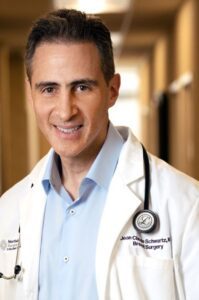 Dr. Schwartz is a highly respected national leader in oncoplastic breast surgery. As a breast surgeon and reconstructive surgeon, he performs most mastectomies and reconstructions in one surgery, saving his patients time and money by seeing only one expert, paying only one set of deductibles and co-pays, and most importantly, reducing time spent in the operating room while providing unparalleled results.
Dr. Schwartz and his entire staff specialize in breast surgeries only, and as such, are highly experienced in dealing with insurance companies. They can provide guidance and invaluable information to women undergoing breast reconstructive surgeries. Additionally, as part of the Northside Hospital system, patients benefit beyond Dr. Schwartz’s practice.
Dr. Schwartz is always accepting new patients diagnosed with breast cancer and makes it his priority to see them immediately, despite his very busy schedule. He is a preferred provider for the majority of insurance plans and is highly recommended by insurance companies and patients alike. By performing most of his surgeries in an outpatient ambulatory center, he saves his patients on hospital costs, co-pays, and more.
Click to SCHEDULE YOUR CONSULTATION TODAY!